Skip to content
  Once in a lifetime deal →




You sent 100 cold emails. Zero replies. You’ve been posting on LinkedIn for months—your posts barely get 10 views. You tried running ads and they cost more than any customer they brought in.
The competition isn’t what it was 5 years ago. Everyone’s doing outreach now. LinkedIn feels saturated. Ad costs keep going up. But some businesses are still getting clients—the ones who’ve figured out how to align their approach with how their specific buyers actually make decisions.
That’s what this guide is about. B2B lead generation works when you match the right strategy to your situation and stick with it long enough to see results. We’ll cover the foundation work most people skip, strategies that fit different business models, and how to spot what’s not working in your current approach.
What You Need Before Starting B2B Lead Generation
Before you spend a dollar on ads or fire off cold emails, you need to get three things straight.
What is B2B Lead Generation?
B2B lead generation is about finding businesses that have problems your product solves, getting their attention, and guiding them through the process until they become customers.
B2B is different from selling to consumers. You’re dealing with multiple people who need to agree on the purchase. The sales cycles are longer. The stakes are higher because it’s company money. This means the volume approach doesn’t work here—you need precision and targeting.
Know Who You’re Targeting
Most people try targeting “all businesses” because they think it gives them more opportunities. It doesn’t. When you target everyone, your messaging becomes so generic that it doesn’t resonate with anyone.
You need a specific Ideal Customer Profile. Here’s what you need to figure out:
- Industry: Which vertical actually gets value from what you’re selling?
- Company size: A 5-person startup makes decisions completely differently from a 100-person company.
- Decision maker: Who’s the person who actually signs off? It can be the founder, or a department head, an IT Director, or even a procurement team.
- Main problem: What’s the actual pain point you’re solving? If you build an email automation tool, they’re not thinking “I need automation.” They’re thinking ,”I’m losing deals because I can’t follow up fast enough.”
- Budget range: Can they actually afford what you’re charging? If your product is $500 a month, don’t waste time chasing companies that struggle with $50 monthly expenses.
Write all this down somewhere you’ll actually look at it. Every strategy you try should focus on this profile, not some vague “businesses that might need this.”
Understand Your Leads
Not everyone who shows interest is in the same place. If you treat them all the same way, you’ll waste your time and theirs.
Marketing Qualified Leads (MQLs): These are people who’ve shown some interest but aren’t ready to talk to sales yet. Maybe they downloaded your guide, attended a webinar, visited your site a few times, and are still figuring things out. Don’t push them into a sales call. Keep sending them helpful stuff and watch for when they get more serious.
Sales Qualified Leads (SQLs): These people are done researching. They want to talk. They requested a demo. They asked about pricing. They want to book a call. When someone does this, you need to move fast. Like, really fast. Within 5 minutes if you can manage it.
When leads fill out forms on your website, you need a system that captures them immediately and tracks their progress through your process.
Agency Handy was built for this—when someone fills out your form, it automatically captures them and organizes them in a pipeline:
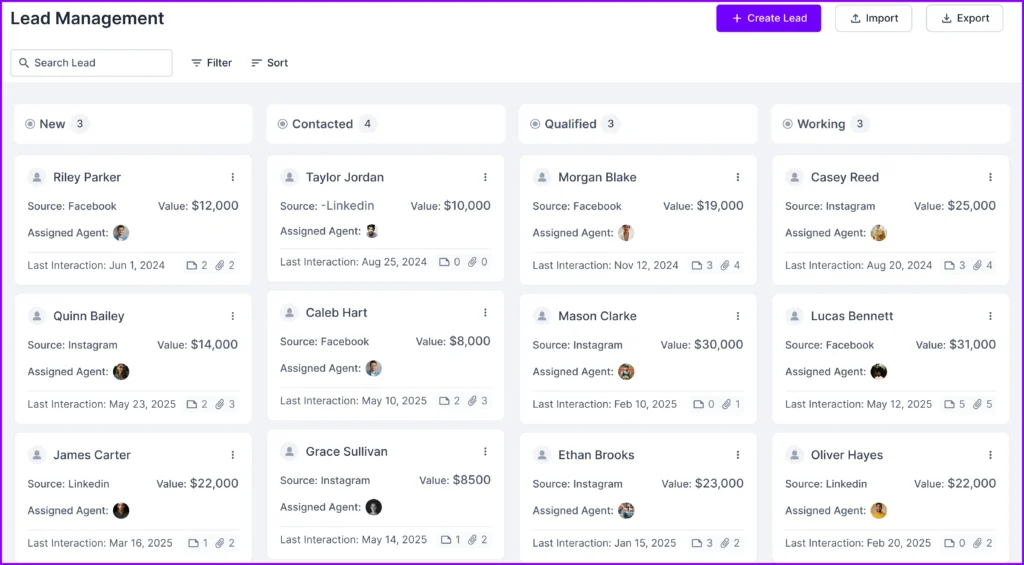
New → Eligible → Proposal Sent → Verified → Working → Client. Nothing falls through the cracks because everything’s visible in one place.
Find What’s Broken
Before you start throwing money at different tactics, figure out where your process is actually breaking down.
- Not enough traffic: If you’re getting under 500 visitors a month. You need to focus on Content planning and SEO.
- Traffic but no conversions: People visit but don’t fill forms. Fix landing pages and simplify forms.
- Wrong leads: Getting interest from bad fits. Tighten your targeting.
- Slow follow-up: Leads go cold because you respond too late. Set up instant automated responses.
Pick whichever one is your biggest bottleneck. Fix that one first. Don’t try fixing everything at once.
The key is making sure you’re targeting the right people. Think about it from their perspective. When would they actually be ready to buy something like yours?
Once you identify your biggest issues and fix them, the tactics you try will actually have a chance to work.
15 Most Effective B2B Lead Generation Strategies
Now that you know who you’re going after and what’s broken in your current setup, here are the strategies that actually work.
Inbound Strategies
Pick the ones that make sense for your situation.
1. Content Marketing + SEO
This is about writing content that answers the questions your ideal customers are already searching for. When someone types “how to automate lead follow-up” into Google and finds your article, you’re building trust before they even know your product exists.
When this makes sense: You’ve got time but not much budget. This approach takes a while—think 6-12 months before you see real traction.
How to actually do it:
Start by figuring out what your ICP is actually searching for. Or use keyword research tools if you want to get more systematic about it.
Then write guides that actually solve those problems with detailed, practical content that someone can actually use. Optimize it naturally. Use your keywords where they make sense.
Publish consistently. At least twice a month if you can manage it.
2. Webinars and Virtual Events
A webinar gives you 30 to 60 minutes of someone’s attention. No ad is ever going to get you that kind of time.
If your webinar is basically just a product demo dressed up as education, people will see through it immediately. Something like “How to build a lead qualification system” is going to get way more interest than “Check out our tool’s features.”
What to do:
- Promote on LinkedIn, email, relevant communities
- Teach useful frameworks during the webinar
- Save the pitch for the end
- Follow up with attendees within 24 hours
- Prioritize people who stayed the full session and asked questions
3. Gated Content and Lead Magnets
Offer b2b leads to something valuable, they give you their contact info in return. Templates, checklists, calculators, industry reports all work well here.
The trick is making it immediately useful. Something like “The Complete Guide to B2B Marketing” sounds impressive but it’s a lot of work to actually read.
But a “Lead Response Time Calculator” or “Cold Email Template Pack”? People can use that within minutes of downloading it.
Best practices:
- Keep forms short: name, email, company name
- Every extra field drops conversion
- Don’t pitch immediately after download
- Send the resource, wait two days, then follow up with related content
4. Website Optimization and Lead Capture
Your website probably has visitors on it right now who are leaving without doing anything. Small changes can make a surprisingly big difference.
Here’s what to fix first:
Your value proposition needs to be clear within about 5 seconds of someone landing on your site. What do you actually do? Who is it for? If someone has to hunt around to figure that out, you’re losing them.
Put a clear call-to-action above the fold. “Book a Demo” or “Start Free Trial”. Don’t make people scroll to find how to take the next step.
Look at your forms. If you’re asking for company size, industry, role, budget, and three other things, you’re losing leads right at the finish line. Start with just email. You can learn everything else later.
Add some trust signals near your forms. Customer logos, if you have recognizable ones. Testimonials. Stats from case studies. Anything that makes someone think “okay, real businesses use this.”
Agency Handy’s embeddable forms are designed to load fast and look clean on any page. When someone’s ready to submit their information, any friction at that moment costs you leads.
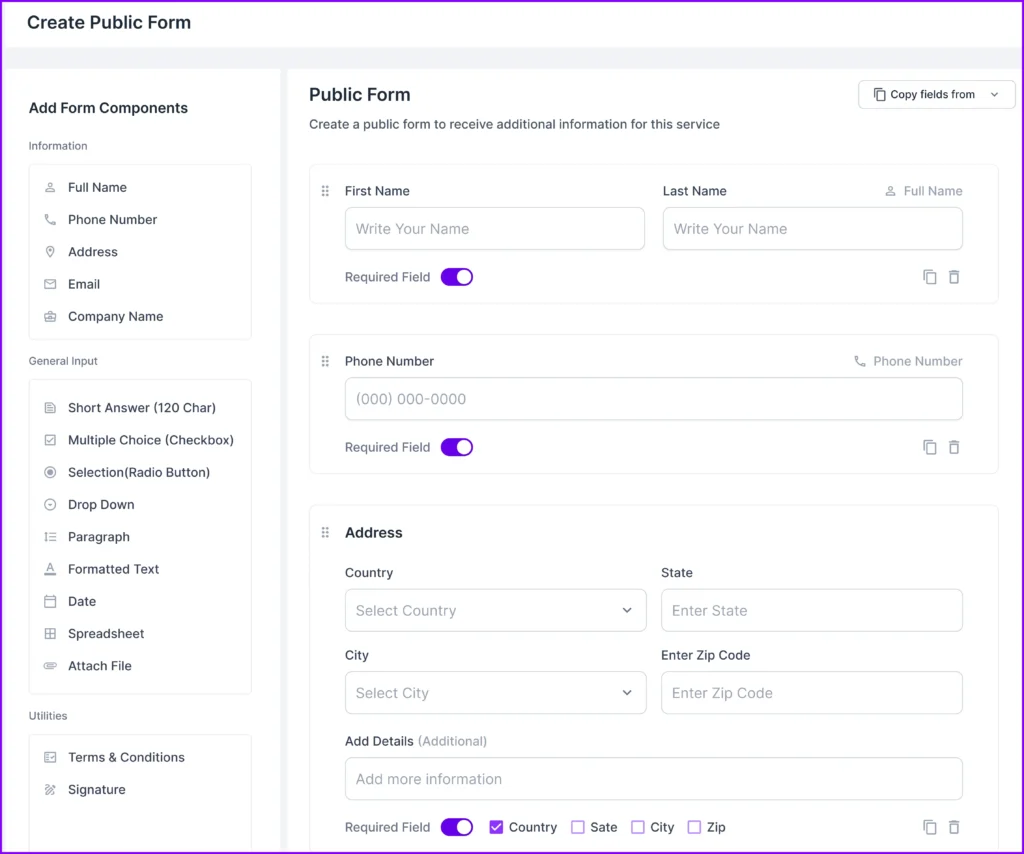
Test one thing at a time. Change your headline, measure it for a week, and see if it helps. Then move on to the next element.
5. LinkedIn Organic Content
Post consistently on LinkedIn, but not about your product features. Talk about the actual problems you solve. The challenges your ICP deals with every day.
What works:
- Share frameworks and practical tips
- Lessons from customer conversations
- Mistakes you’ve made
- Comment on target audience posts with real insights
- Engage regularly with your ICP’s content
Engage with content from your ICP regularly. When potential customers see your name showing up in their feed every week, adding value to conversations, you’re building familiarity without being pushy. Then, when they actually need what you’re selling, you’re already top of mind.
Outbound Strategies
6. Cold Email Outreach
Cold email still works. But only if you’re not just blasting out generic templates to thousands of people.
When this makes sense: You have a clear ICP and you can personalize at scale. This works across most B2B industries, but it requires some effort upfront.
How to actually do it:
- Line 1: Personalized observation about their business
- Lines 2-3: Problem you solve, specific to their situation
- Line 4: One clear ask (short call or quick question)
- Keep under 100 words
Don’t just send one email and give up. Send a sequence. If someone doesn’t reply, follow up 3-4 more times over about two weeks. Most responses actually come from follow-ups, not the first email. People are busy—sometimes they need to see your name a few times before they engage.
What to expect: A 1-5% positive reply rate is pretty normal. If you’re getting under 1%, something’s off with either your targeting or your messaging.
7. LinkedIn Outreach and Social Selling
Here’s what not to do: send a connection request with a sales pitch attached. That’s just spam in a different wrapper.
The right approach:
- Connect without message (higher acceptance)
- Wait 2-3 days before messaging
- Reference something specific about their profile or recent activity
- Build sequence: Connection → Personalized message → Value-based follow-up → Ask for call if they engage
If LinkedIn is going to be a major channel for you, Sales Navigator is probably worth the $99 a month. You can filter by job title, company size, recent changes like new hires or funding. It makes finding the right people a lot faster.
8. Cold Calling
When to use: You’re selling something with a higher ticket price, deals over $10K usually. Or you’re in an industry where decision-makers actually prefer talking on the phone over endless email threads.
Call with a specific reason for reaching out. “I noticed you recently expanded to three new locations” is way better than “I wanted to tell you about our product.”
Your goal on that first call isn’t to pitch everything. It’s just to book a meeting where you can have a real conversation. Keep it casual. Ask if now’s actually a good time to talk. If it’s not, ask when you can call back.
Expect a lot of no-answers. Expect rejections. That’s just part of it. But the people who do answer and who fit your ICP? Those conversations tend to move pretty fast.
9. Account-Based Marketing (ABM)
ABM is about focusing all your marketing and sales energy on specific high-value accounts. Instead of trying to reach as many people as possible, you pick maybe 20-50 companies you really want to work with, and you personalize everything for them.
When this makes sense: Your average deal size is $20K or more, and you know exactly which companies you want to work with.
How to do it:
- Build list of ideal target companies
- Research each thoroughly
- Identify multiple decision-makers at each
- Coordinate outreach across email, LinkedIn, ads, and content
- Create custom landing pages for high-priority accounts
This takes a lot more effort than other approaches. But when you’re going after big deals, the conversion rates can be significantly higher.
10. Paid Advertising (Google and LinkedIn)
Google Ads work well when you’re targeting high-intent searches. Someone typing “best CRM for small agencies” or “lead management software” is actively looking for solutions right now.
Start with search ads focused on bottom-funnel keywords. The ones that show buying intent, not just curiosity.
Set a modest budget to start, maybe $500-1000 a month minimum. Track which specific keywords actually lead to conversions.
LinkedIn Ads are more effective when targeting very specific roles and companies. You can get super targeted at something like “Marketing Directors at 50-200 person SaaS companies in North America.”
LinkedIn is expensive, though. Expect to pay $8-15 per click, sometimes more. But if you’re going after the right people with the right offer, the lead quality is high.
Use retargeting on both platforms. This keeps you in front of people who have visited your site but haven’t converted yet. Sometimes people need to see you a few times before they’re ready to take action.
Relationship Strategies
11. Referral Programs
Your existing customers probably know other businesses just like them. You just need to ask for introductions.
How to do this:
Make it easy and specific. “Who else do you know dealing with [specific problems]?” works way better than “Do you know anyone who might need our product?”
The first one gets them thinking about actual people. The second one is too vague.
You can offer incentives if it makes sense for your business—account credits, cash bonuses, extended features. But honestly, a lot of happy customers will refer people without any incentive if you just ask them to.
When to ask: Wait about 30-60 days after someone becomes a customer. Give them time to actually see results and get value from what you’re offering. Then ask.
12. Strategic Partnerships
Find other businesses that are selling to the same customers you are, but offering something different. If you’ve got a lead management tool, you might partner with marketing agencies, CRM consultants, or sales training companies.
What to do:
- Co-create content: joint webinars, co-authored guides, bundled offers
- Puts you in front of their audience and vice versa
- Pick partners carefully, as their reputation reflects on you
13. Community Engagement
Join the communities where your ICP actually hangs out. That might be Reddit, industry-specific Slack groups, Discord servers, niche forums.
Don’t show up and immediately start selling. That gets you kicked out fast. Instead, just help people. Answer questions when you know the answer. Share what’s worked for you. Be genuinely useful.
Over time, people start recognizing your name. They see you as someone who knows what they’re talking about. Then, when they actually need what you’re offering, they’ll reach out directly. Or when someone asks for recommendations, other people will mention you.
14. Customer Reviews and Social Proof
Before someone books a demo with you, they’re checking reviews. About 95% of buyers read reviews before they purchase anything.
What to do:
- Ask satisfied customers for reviews on G2, Capterra, and Trustradius
- Send a direct link, draft something they can edit
- Feature testimonials near forms, homepage, and landing pages
- Include specific results: “Reduced lead response time from 4 hours to 12 minutes”
- Video testimonials work even better
15. Events and Trade Shows
Industry events put you in the same room with a concentrated group of your exact ICP. That’s pretty powerful.
When this makes sense: You’ve got a budget of $2K to $10K+ per event. And your ICP actually attends specific industry conferences or trade shows.
What to do:
- Go with clear goals: X qualified conversations, Y demos booked
- Have real conversations, understand their problems
- Take notes on the specifics they mention
- Follow up within 48 hours while memorable
- Reference something specific from the conversation
Events are expensive, but they can convert at pretty high rates when you’re strategic about which ones you attend and how you work them.
How to Build Your Multi-Channel B2B Lead Generation System
Using just one strategy rarely works long-term. The businesses that are getting consistent results are using multiple channels that work together and reinforce each other.
The mistake most people make is either picking channels randomly or trying to do everything all at once. Both approaches tend to fail.
Match Channels to Your Situation
Which channels you should focus on depends on three main things: how much budget you have, how much time you can give it, and where your ICP actually spends their time.
If You’re Just Starting Out (Under $1K/month budget)
Stick to channels that need time more than money:
- LinkedIn organic content and outreach
- SEO and content marketing
- Community engagement—Reddit, Slack groups, forums where your people hang out
- Cold email (you just need to pay for basic email tools and contact data)
You’re basically trading your time for traction here. Pick two channels maximum. Do them consistently for 90 days before you even think about adding more. Don’t spread yourself thinner than that.
If You Have Some Budget ($1K-5K/month)
Now you can add some paid channels to speed up what you’re already doing organically:
- Keep doing your organic content and outreach
- Add either Google Ads or LinkedIn Ads—pick one, not both yet
- Start up a referral program
- Host webinars quarterly
At this level, you can start really testing what converts. Then double down on whatever’s working best.
If You’re Scaling ($5K-20K/month)
This is where you can run a real multi-channel system:
- Paid ads on multiple platforms
- Consistent content production
- Regular webinars or even in-person events
- Outbound campaigns at serious scale
- ABM programs for your highest-value accounts
- Active partnership development
The key at this stage is coordination. Your channels need to reinforce each other, not compete for attention and resources.
If You’re Enterprise Level ($20K+/month)
At this budget, you’re running pretty sophisticated campaigns:
- Full ABM programs with dedicated people just for that
- Major event sponsorships
- Large-scale content operations
- Advanced retargeting and really detailed nurture sequences
- Entire sales development teams handling outbound
You probably need specialized roles or even a b2b lead generation agency to manage everything at this level of complexity.
How Channels Actually Work Together
The real power shows up when your channels create what people call a “surround sound” effect. Your prospect starts seeing you in multiple places. That builds familiarity and trust way faster than any single channel could.
Here’s how it might actually play out:
- Prospect sees your LinkedIn post about their problem
- Later, they search and find your blog article
- Download your template, enter email sequence
- See the retargeting ad about the webinar
- Attend webinar, request demo
- The sales team follows up immediately
No single one of those touchpoints closed the deal. But together, they built enough trust and interest that the prospect was ready to take action.
Timing Your Outreach Across Channels
Don’t blast someone on every channel simultaneously. That’s just overwhelming and annoying. Coordinate the timing instead.
If someone downloads your lead magnet:
- Day 0: Send them the resource via email like you promised
- Day 2: Follow-up email with some related content
- Day 3-7: If they’re active on LinkedIn, send a connection request there
- Day 7: Send another email if they haven’t engaged with the previous ones
- Day 14: If they’re high-value, maybe it’s worth a cold call at this point
If someone visits your pricing page but doesn’t convert:
- Immediately: Start showing them retargeting ads
- Within 24 hours: If you have their contact info, your sales team should reach out
- Day 3: Send an email asking if they have any questions
- Week 2: Follow up with a case study or customer story that’s relevant
The goal is being persistent without being annoying. Using multiple channels lets you stay visible while you vary the approach and give them some breathing room.
Track Everything
You actually need to know what’s working and what’s not. Track these metrics separately for each channel:
Traffic stuff:
- How many visitors are coming from each channel
- What each visitor costs you (for paid channels)
Conversion stuff:
- What percentage of visitors become leads
- What each lead costs you
- How qualified are those leads actually?
Revenue stuff:
- What percentage of leads become customers
- What does it cost you to acquire a customer through each channel
- How much value do customers from each channel bring over
Use UTM parameters so you know where traffic and conversions come from. Your CRM should show which channels produce customers, not just leads.
Integration and Workflow
When someone fills out a form, that information should automatically:
- Create a contact in CRM
- Add to the appropriate email sequence
- Notify sales if they’re SQL
- Tag based on engaged content
Agency Handy handles this automation. Leads from embedded forms get captured, organized, and routed automatically. Your team sees them in a clear pipeline and knows what to do next.
Without integration, leads get lost. Someone fills the form, but nobody follows up because it went to an unchecked inbox.
Start With Two, Then Add
Don’t launch five channels simultaneously. Pick two that make sense for your budget and ICP.
Run for 60-90 days. Measure what works. Once you have consistent results, add a third.
Most b2b lead generation strategies fail because people do too many things poorly instead of a few things well.
Common B2B Lead Generation Mistakes to Avoid
Here’s what I keep seeing people get wrong, over and over.
Targeting Everyone
“Our product works for any business!” I hear this all the time. And look, I get it—you don’t want to limit your opportunities. But here’s what actually happens when you target everyone: your messaging becomes so generic that it doesn’t resonate with anyone.
I’ve watched companies waste thousands on ads because they couldn’t articulate who they’re actually for. Pick a specific type of business and talk directly to them. Yes, it feels scary to narrow down. Do it anyway.
Quitting After Two Weeks
You try LinkedIn outreach. Send 50 messages. Get 2 replies. Then you declare “LinkedIn is dead” and move on to the next thing.
Most strategies need 60-90 days before you can actually judge if they’re working. SEO takes even longer—6-12 months in most cases. When you’re switching tactics every two weeks, you’re not giving anything a real chance to work. You’re just collecting failed experiments.
Ghosting Your Own Leads
Someone fills out your contact form. You get busy. You reply three days later. Or maybe you send one email and then never follow up because you assume they’re not interested.
Meanwhile, they’ve already had conversations with three of your competitors. B2B buyers typically need 5-7 touchpoints before they’re ready to make a decision. And here’s a wild stat: responding to a lead in 5 minutes instead of an hour can increase your conversion by 4x.
This is where tools like Agency Handy actually make a difference. It captures leads the instant they fill out your form and organizes them so nothing slips through the cracks.
Celebrating the Wrong Numbers
“We got 100 leads this month!” Okay, cool. But how many of those became customers?
I see this all the time—people obsessing over lead count while completely ignoring that their conversion rate is sitting at 1%. Lead volume doesn’t matter if they’re all bad fits who were never going to buy anyway. Track how many leads actually turn into paying customers. That’s the number that matters.
Making Everything Complicated
Your cold email is five paragraphs long. Your website is full of jargon that nobody outside your industry understands. Your sales pitch tries to explain seventeen different features.
People are busy. If they can’t figure out what you actually do in about 10 seconds, they’re gone. They’re not going to work to understand you.
Keep it simple: one problem you solve, one clear benefit, one obvious next step. That’s it.
Flying Blind
You’re running ads and doing outreach. Posting content. But you have no idea which channel is actually bringing in customers.
Without tracking, you’re just guessing. You might be throwing money at channels that don’t work while completely ignoring the ones that do. Set up proper tracking. Know what’s working.
Make decisions based on data, not gut feelings.
Conclusion
Most people will read this article, nod along, maybe bookmark it, and then do absolutely nothing. Don’t be that person.
You don’t need to implement all 15 B2B lead generation strategies. That would be overwhelming and probably counterproductive.
Just pick two that make sense for your situation. Define your ICP clearly. Set up proper lead capture with something like Agency Handy’s forms so nothing gets lost. Then start reaching out.
Frequently Asked Questions
How is B2B lead generation different from B2C?
In B2B, you sell to other companies instead of individual consumers. The buying cycle is longer, involves multiple decision-makers, and focuses more on ROI and business outcomes than emotion-driven choices.
What are the best B2B lead generation strategies?
Top B2B lead generation strategies include content marketing, LinkedIn outreach, SEO, cold emailing, webinars, and referral programs. The best results come from combining 2–3 channels consistently rather than trying everything at once.
How can I generate B2B leads on LinkedIn?
Post valuable insights, engage with your target audience’s content, and send personalized connection messages. Avoid pitching right away, build relationships first, then introduce your solution when relevant.
How do I qualify B2B leads?
Qualify leads by checking if they fit your Ideal Customer Profile (industry, company size, role, budget) and by identifying intent. MQLs show interest; SQLs are ready to talk. Prioritize follow-up speed for SQLs.
What tools help with B2B lead generation?
Tools like CRMs, lead capture forms, email automation, and data enrichment platforms help manage and nurture leads. Platforms like Agency Handy automate form submissions and pipeline tracking to prevent missed leads.
How long does it take to see results from B2B lead generation?
It depends on your strategy. SEO and content marketing can take 6–12 months, while cold outreach or ads may show results in a few weeks. Consistency is key—don’t switch tactics too soon.
How do I create an effective B2B lead magnet?
Offer something instantly useful like templates, calculators, or checklists. Keep forms short—just name, email, and company. Avoid pitching right after download; nurture leads with valuable follow-ups first.
How can I increase my B2B conversion rate?
Simplify forms, clarify your offer, and respond fast to new leads. Adding testimonials, trust badges, and case studies near CTAs also helps convert visitors who are close to deciding.
Why is my B2B lead generation not working?
Common reasons include poor targeting, weak messaging, slow follow-up, or lack of tracking. Fix one bottleneck at a time—whether it’s traffic, conversions, or lead quality—before scaling.