Skip to content
  Get the best 3-year deal NOW →



The average B2B conversion rate in 2026 is 2.9%. Sure, specific numbers vary widely by industry and lead source. Yet, the fact remains that a significant portion of your potential customers won’t convert into clients.
The culprit isn’t the quality of your services; it’s your lead-generation funnel.
Building an effective lead-generation funnel isn’t just about knowing how to market and sell your agency’s services. It’s just as much about knowing how to compel web visitors to make a positive conversion decision.
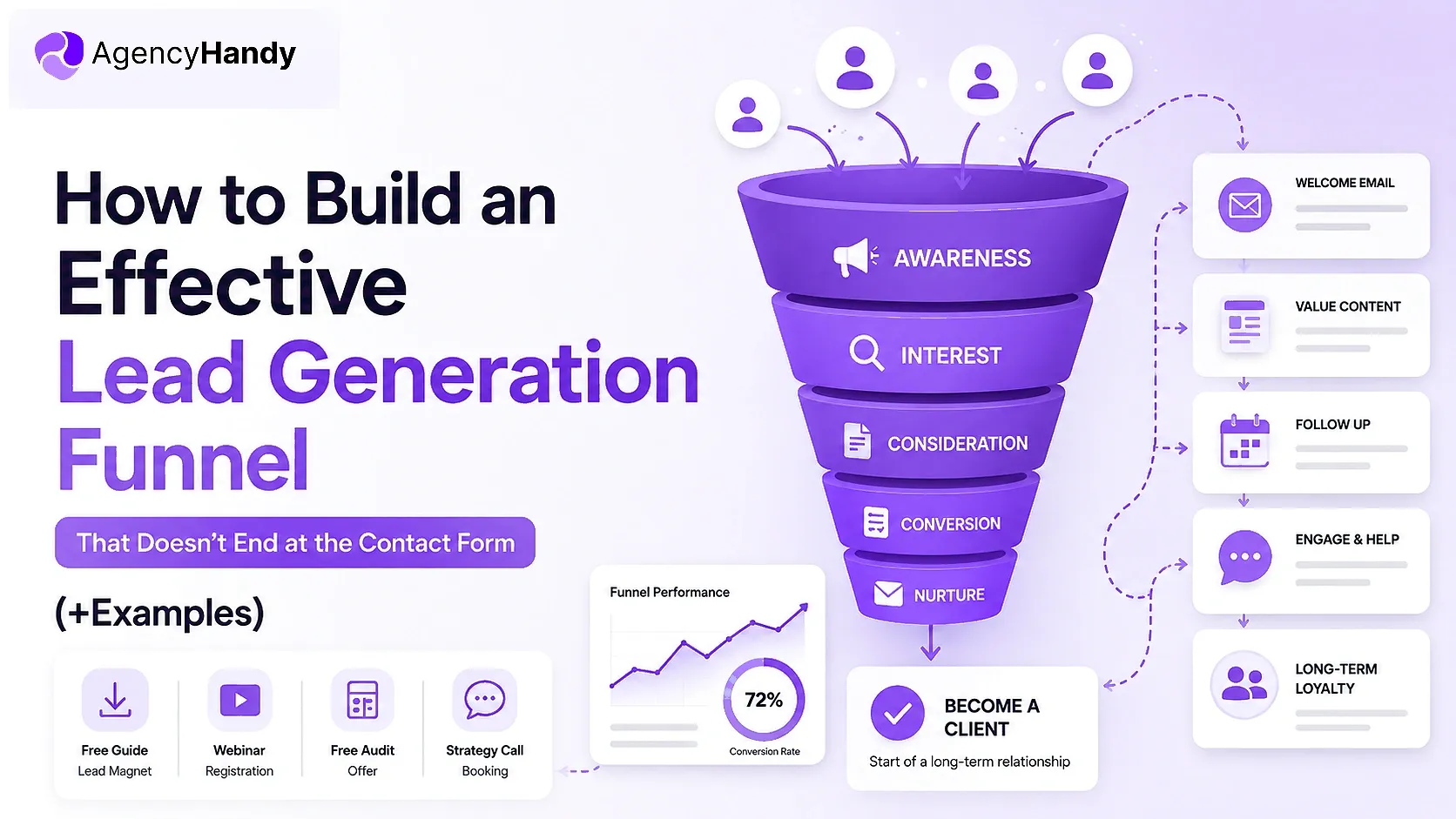
Here are the steps to ensure your lead-generation funnel doesn’t end at the contact form.
Qualify Leads Before They Reach Sales
Building an effective lead-generation strategy requires you to understand the sales funnel first.
In general, B2B buyers — and consumers too — don’t just decide to invest in a service or solution on a whim. They think through every conversion decision based on the information they collect throughout the different stages of their buyer’s journey.
This means that not every prospect interaction will be a sales opportunity. Instead, a significant portion of your web visitors will likely be in the initial stages of the sales funnel. And bombarding them with sales messaging during this phase probably won’t deliver the outcomes you’re after.
The solution to this lead-generation obstacle is to qualify your leads before they reach sales. Identify which prospects are genuinely interested in your offer. And don’t treat every enquiry as a sales lead.
Doing so won’t just prevent you from wasting your sales team’s precious time. Much more importantly, it can allow you to provide each prospect with a personalized, hyper-relevant brand experience (which automatically elevates purchase intent).
So, how can you qualify leads? The best method is to use tools and techniques that evaluate each prospect’s needs and position in the sales funnel.
Progressive forms, for instance, aim to overcome the low conversion effectiveness of elaborate sign-up forms. By breaking up prospect data collection across multiple touchpoints, brands can prevent potential leads from becoming overwhelmed by long forms (while still retaining the ability to collect valuable lead information).
Assessments and quizzes are perhaps even better at qualifying leads because they encourage prospects to segment themselves, while ensuring high conversion rates by offering value in return.
Finally, tracking behavioral signals to qualify leads can be another smart strategy, especially because it doesn’t require any prospect input.
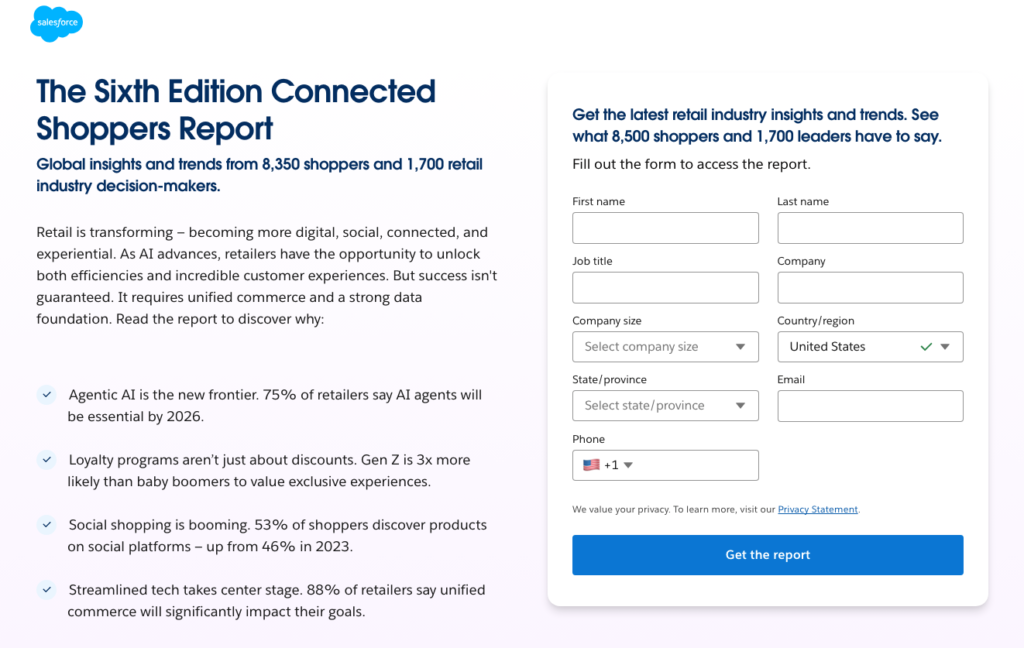
For example, Salesforce’s lead-generation forms work by progressively profiling website visitors. You can see this in action on the brand’s downloadable resources page. Here, the company requires leads who are yet to convert to provide initial information and contact details. Return visitors, however, aren’t required to fill out form fields they’ve already completed. Instead, the brand uses its CRM to build prospect profiles over time. It employs behavior signals and lead scoring to qualify leads, automatically handing off qualified prospects to the relevant member of the brand’s sales team.
Source: salesforce.com
Give Prospects a Compelling Reason to Become Leads
Offering gated resources in exchange for contact information is a pretty standard lead-generation strategy. And it can drive exceptional outcomes.
Data shows that gated resources can achieve impressive conversion rates — especially when well optimized. And some studies have even found that B2B decision-makers are more willing to share their personal information if they expect to receive value in return.
However, the widespread use of AI is rapidly changing the pre-purchase research phase of the buyer’s journey. And a growing number of prospects now need a very compelling reason to become leads.
The most effective method to incentivize conversions in this climate, then, is to offer prospects highly valuable and relevant resources in exchange for becoming leads. That way, they won’t just feel compelled to fill out your forms. They’ll also perceive the action as worthwhile. Moreover, the sales conversation that’s bound to follow won’t feel like too big of a risk or deterrent.
The best way to implement this tactic is to identify the aspect of your company’s expertise (that you can provide for free) that carries the most weight for your potential customers.
Is it a free audit or consultation? Or would your prospects benefit more from original research reports, industry insights, or detailed educational playbooks?
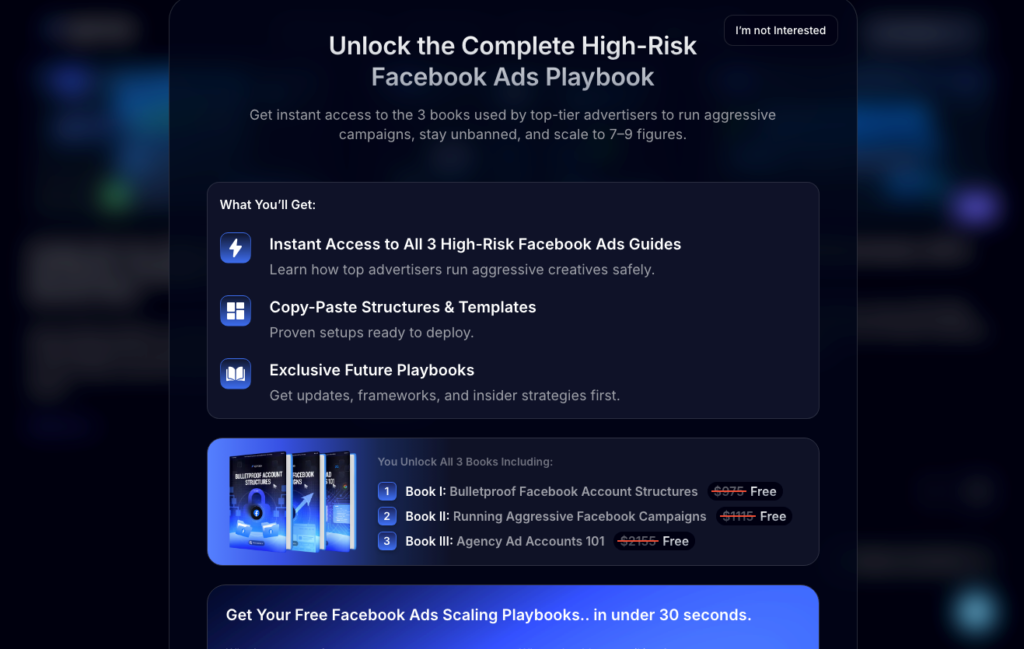
Uproas, for example, offers free e-books to encourage prospects to become leads. By highlighting the monetary and educational value of these resources, Uproas makes answering a three-question form a small price to pay for the value on offer. And by asking for a phone number in addition to an email address, the business makes it easy to offer qualified leads a free strategy call later in the funnel — a lead nurturing tactic that converts.
Source: uproas.io
Provide More Than One Way to Engage
The B2B sales cycle no longer takes place on a single plane. Instead, 84% of B2B buyers expect brands to operate across multiple sales channels. Moreover, 94% say that the omnichannel sales model is as (or more) effective as previous sales models.
When it comes to lead-generation, these findings indicate that relying on a single contact form isn’t sufficient anymore. In fact, it can significantly limit your brand’s conversion potential.
Instead, when aiming to build a lead-generation funnel that works, explore opportunities to cover alternative engagement options.
For instance, almost 70% of B2B buyers prefer sales rep-free or self-service buying experiences. And a growing number are using a mix of AI and human interactions to make purchase decisions. Incorporating AI chat, live agent chat, guided demos, self-guided free trials, or even self-service resources in your funnel allows prospects to interact with your business in the way that best suits their needs.
Because of the abundance of convenient choices, a multi-channel experience keeps prospects moving through the buyer’s journey. Why? Because it doesn’t allow them to become frustrated or inconvenienced and abandon the funnel.
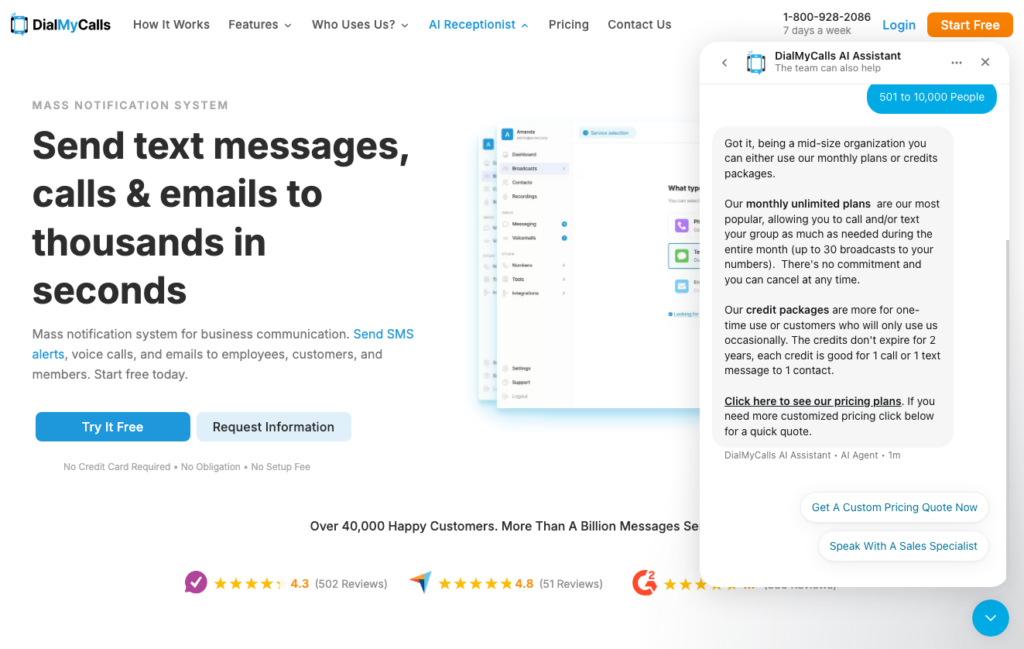
DialMyCalls is an excellent example of a brand that invites prospects to engage in the way that’s most convenient to them. In addition to a phone number that’s operational 24/7, this brand also has several other lead-generation pathways. These include the ‘Request Information’ contact CTA in the hero section of its website. The free trial is an attractive self-guided product evaluation opportunity for prospects who prefer a more hands-on research approach. And the AI chat assistant covers a range of potential questions, effectively guiding prospects closer to a conversion decision.
Source: dialmycalls.com
Nurture Leads Until They Are Ready to Buy
Do you know how many touchpoints it takes to convert a lead into a customer? Research suggests the average number is eight. However, for complex products and services, the sales cycle can be much longer. Building an effective lead-generation funnel that doesn’t end at the contact form requires that you pay just as much attention to lead nurturing as you do to acquisition.
There are several tactics you can use to keep your prospects engaged until they’re ready to make a buying decision.
Automated emails, for example, deliver targeted content straight to your prospects’ email inbox (the highest-converting traffic source). Personalized content gives your leads hyper-relevant resources and messages they won’t ignore. And follow-up campaigns maintain prospect engagement rates, gently guiding leads closer to a purchase decision (thanks to the mere-exposure effect).
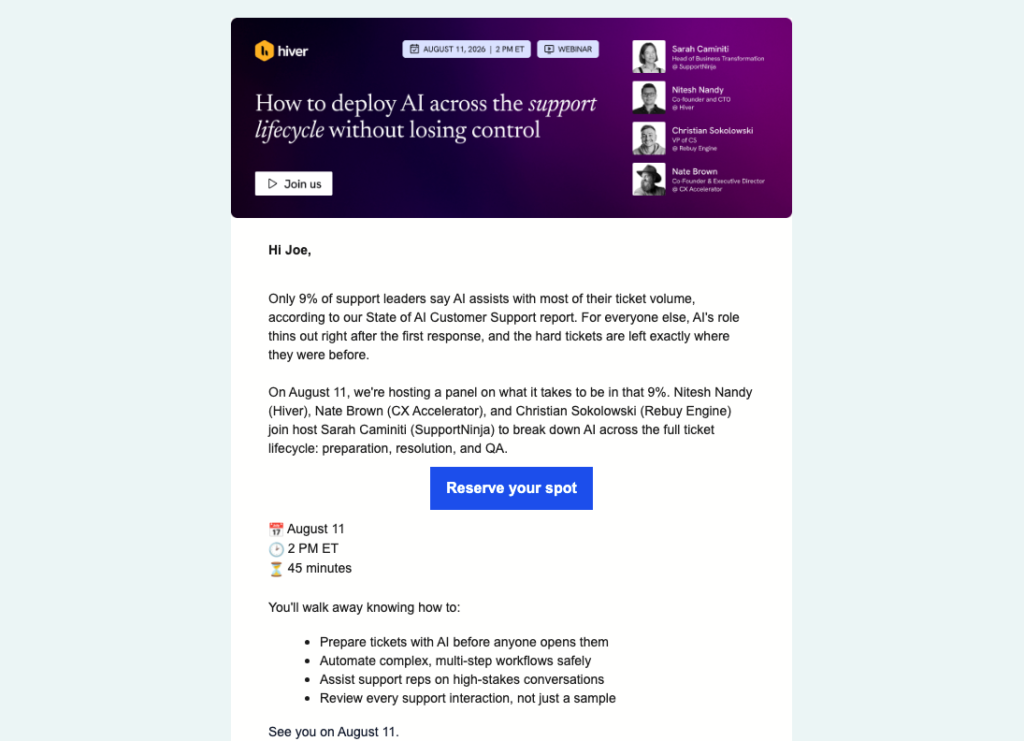
For instance, check out Hiver’s email marketing strategy, which relies on a value-based approach to nurturing leads. This brand regularly invites potential customers to attend one of its webinars — a content format that’s particularly effective at elevating purchase intent. But what’s genius about this brand’s approach to keeping prospects engaged is that it does it with bite-sized pieces of valuable, question-raising industry insights. For example, in the email below, Hiver states that only 9% of support leaders say AI assists with most of their ticket volume. With this info, it grabs its subscribers’ attention and inspires them to set a new goal of becoming part of that 9% — an outcome the business can provide with its product and guidance.
Source: gmail.com
Remove Friction at Every Conversion Stage
Effectively capturing leads isn’t merely dependent on your ability to awaken your target audience’s interest. Instead, a high-converting sales funnel has to be completely straightforward, without any barriers or frustrating UX errors that could reduce conversion rates.
For starters, the number of form fields in your lead-generation elements directly influences conversions. The fewer fields, the higher your prospects’ chances of following through — primarily because they’re less likely to become fatigued or come across a piece of info they’re unwilling to share.
Confusing calls to action can be just as detrimental to lead generation. Because consumers need to understand the implications of taking a conversion action, a lack of clarity can elevate their risk perception and harm their confidence in your offer’s value or trustworthiness.
It’s also worth noting that poor user experience design can prevent form completion or complicate the process, automatically harming conversion rates.
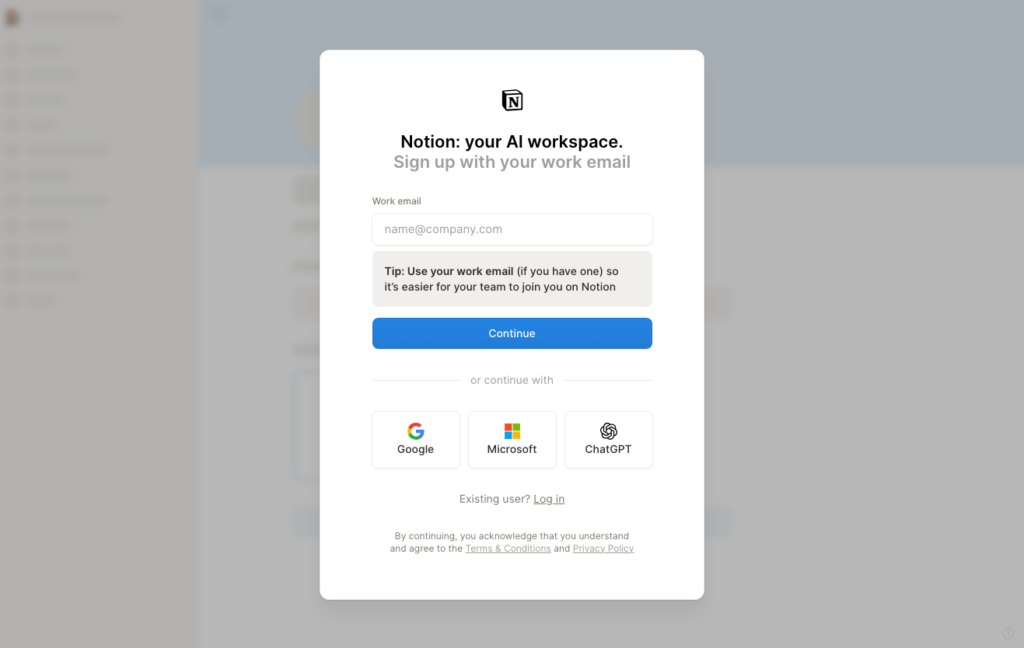
Notion’s sign-up journey is extremely straightforward, featuring a clean design, minimal form fields, and a simple onboarding experience. Because the registration process is practically friction-free, the brand makes it easy for new prospects to convert into free trial users. Only then does it begin to nurture leads into paying customers, primarily through a combination of high-quality educational content and personalized marketing messages.
Source: notion.com
Measure Success Beyond Contact Form Submissions
The tips and techniques above are all great ways to build a lead-generation funnel that doesn’t end at the contact form. But success requires more than just implementing best-practice optimization advice.
For true success, measuring performance is just as important as the funnel-developing stage of your journey. Why? Because form fills are just one metric. And to truly optimize your funnel in a meaningful way, you have to actively analyze business outcomes connected to your lead-generation efforts.
Once you have a clear idea of what happens at every stage of your lead-generation funnel, you’ll have a much better picture of what you need to do to boost its performance.
The best metric to start with is lead quality. Do your forms capture a large number of leads, but those leads are not truly a good match for your brand’s offer? That indicates that you need to adapt your marketing and value positioning to attract prospects likely to buy your solutions. Otherwise, your sales team is just wasting their time on leads that will never turn into long-term customers.
Qualification rates tell a similar story. If only a small percentage of the leads you capture actually convert into customers, it’s clear you’re attracting (and converting) the wrong audience.
Active intent signals — like consultation and demo bookings — can tell you a lot about your prospects’ purchase intent. These metrics can indicate the health of the mid-stages of your sales funnel, telling you whether your lead-capturing efforts are likely to result in conversions.
Finally, no funnel is complete without reaching its end goal — the conversion. Measuring customer conversions is one of the main signals of whether your lead-generation efforts are bearing fruit. If the sales process isn’t working out in your favor, that’s a very clear signal you need to fix something in the earlier stages of the cycle.
Final Thoughts
Building an effective lead-generation funnel is a process that requires lots of trial and error.
Getting prospects to fill out a form is just one part of the equation, but the work doesn’t stop there. For business success, you’ll want to find ways to nurture that initial interest into purchase intent.
Agency Handy is a structured CRM solution that can help optimize your funnel. Whether you need to track inquiries, evaluate lead quality, or encourage conversions, the platform lets you handle the entire process inside a single solution.