Skip to content



Think about the last time someone reached out about your services. How long did it take you to reply, considering it as a part of your regular lead management work?
According to Harvard Business Review, companies that respond within one hour are 7 times more likely to qualify a lead than those that wait even 60 minutes. And 60 times more likely than those who wait 24 hours.
Most agency owners reply when they get a chance. That’s how potential clients quietly move on to someone else.
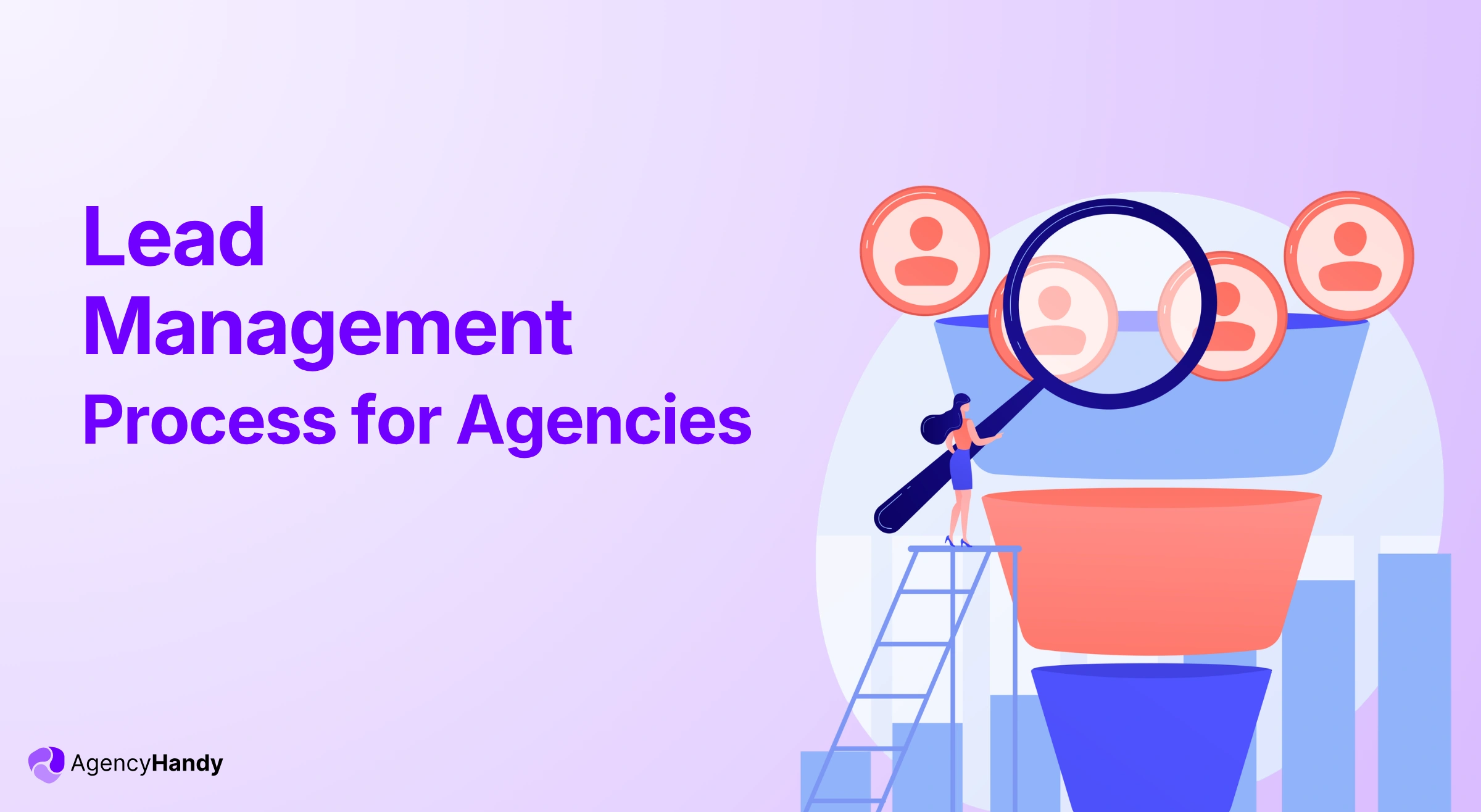
In this article, you’ll learn how to build a simple version of the lead management process. How to build a system that works even when you’re the only person running it.
What is Lead Management?
Lead management is how you handle potential clients from the moment they reach out to the moment they sign up or don’t.
That includes how you capture their info, how you follow up, and how you keep track of where each person is in the process.
Without this, you’re basically just winging it. And when you’re busy, people get missed.
A good lead management process usually covers a few things. Where your leads are coming from. Whether they’re actually a good fit for your services. How and when you’re following up. And what happens once they say yes?
Each of those is a step. And each step needs someone — or something — responsible for it. Otherwise, leads just pile up with no clear next move.
Types of Leads in Agency Business
Defining lead type matters because each lead type needs a different approach.
Someone who found your website and filled a contact form is very different from someone a past client personally referred to you
If you send pricing to a cold lead, you’ll lose them. They don’t know you well enough yet to make that decision.
If you keep nurturing a hot lead with more emails and more content, you’re just adding unnecessary steps between them and saying yes. They’re ready — just close it.
And if you treat a warm referral like a stranger, it puts them off. They came in with trust already built. Don’t reset that.
The easiest way to think about it is by temperature and approach accordingly. Here are the primary lead types:

Cold Leads
These people have shown some interest but don’t really know you yet. Maybe they clicked an ad, found you on Google, or just dropped their email somewhere.
They need more time and information before they’re ready to talk seriously.
Warm Leads
They’ve had some real interaction with you. It can be a referral from someone they trust, a reply to your email, or a follow-up after a first call. They already have a level of trust. All they need is the right nudge.
Hot Leads
These are ready to move. They know what they want, and they’ve already decided they like you. They’re just waiting on a proposal or final conversation.
Complete Lead Management Process for Agencies
The following lead management process perfectly aligns with agencies. However, it might overlap with the lead management strategy of other business fields.
Lead Qualification
Not every inquiry deserves the same amount of your time. Qualification is just figuring out early whether someone is actually worth pursuing.

The faster you do this, the less time you waste on leads that were never going to convert.
What to Look For
Here’s what you need to look for in a lead to mark it as qualified:
Budget fit
Can they actually afford what you offer?
You don’t need an exact number upfront, but a rough range tells you a lot. If someone’s budget is nowhere near your starting price, that’s useful to know in the first conversation, not the third.
Service fit
Do they need what you actually do?
Sounds obvious, but agencies regularly spend time on leads that need something outside their scope. The earlier you spot this, the better.
Timeline
Are they ready to start or just exploring?
Someone who needs work done next month is a very different conversation from someone who’s “thinking about it for Q3.”
Decision maker
Are you talking to the person who actually signs off?
If not, everything you discuss needs to be repeated to someone else anyway.
Identify Qualified Leads
You don’t need to run through a checklist on a call. That feels like an interview and puts people off.
Most of it comes out naturally if you ask the right things early.
A couple of questions on your contact form can tell you the budget range and service needs before you even get on a call.
Then, on the call itself, asking something like “what’s driving this for you right now” usually tells you the timeline and urgency without directly asking.
The goal is to have a real conversation while paying attention to the answers that actually matter.
Lead Scoring for Agencies
Lead scoring is just a way of ranking your leads so you know who to focus on first.
When you have multiple people in your pipeline at the same time, you can’t give everyone equal attention. Scoring helps you figure out who’s closest to converting and who needs more time.
How Scoring Works
You assign points to leads based on what you know about them. The more they match your ideal client, the higher the score.
A basic scoring system for an agency might look like this:
- Budget matches your range = high points
- Needs exactly what you offer = high points
- Ready to start within the month = high points
- Came in through a referral = high points
- Still early in their decision = lower points
- Budget is unclear = lower points
Leads with the highest scores get your attention first. You follow up faster, you prioritize their proposals, you make time for their calls.
Lower-scoring leads don’t get ignored. They just go into a slower, lighter follow-up until they move one way or the other.
Lead Tracking Without a Complex CRM
Most lead tracking advice assumes you have a dedicated sales team and a $500/month CRM. If you’re running an agency, that’s probably not your situation.

You don’t need anything complicated. You just need to know three things about every lead at any given time:
- Where did they come from
- Where they are in the process
- What needs to happen next
What You Actually Need to Track
- Name and contact info: Obvious, but keep it in one place
- Lead source: Referral, inbound, outreach
- Current status: New, contacted, qualified, proposal sent, closed
- Last interaction: When you last spoke, and what was discussed
- Next action: What needs to happen and by when
Where to Track It
A simple spreadsheet works if you’re just starting out.
For more than a handful of leads coming in regularly, you need something that doesn’t rely on you remembering to update a sheet.
A client management tool with a built-in lead pipeline keeps everything in one place. All your leads, your follow-ups, and your client work remain within the platform.
Further Read:
Best Client Management Software: A Complete Guide for Agencies
Lead Nurturing
Not every lead is ready to buy when they first reach out. Some people are still figuring out what they need. Others are comparing options. A few just need a bit more time.
Nurturing is how you stay on their radar without being pushy about it.
What Nurturing Actually Looks Like for Agencies
It doesn’t have to be a complicated email sequence. For most agencies, it’s much simpler than that.
- Following up after a first call with something useful, be it a relevant case study, an example of work that matches what they mentioned
- Checking in after a few weeks if you haven’t heard back. A short, casual message asking if they’re still exploring options.
- Sharing something relevant, like an article or a result you got for a similar client. It can be anything that reminds them you exist and know your stuff.
But to be able to nurture, you will have to organize those leads into categories.
Sales teams work more efficiently when you organize them into groups like contacted, proposal sent, waiting, qualified to work, pending, later, etc.
And this is where Agency Handy helps you sort those leads right from your public forms embedded on the website.
Your sales team can only work on the top-prioritized leads, saving a lot of time from wasting on unqualified leads.
Lead Follow-Up System
Most leads don’t convert on the first contact, and it’s pretty normal. Not because they’re not interested, just because you forget to approach at the right time.

But a decent follow-up system makes sure you’re not relying on memory to stay consistent.
How Many Times Should You Follow Up on a Lead
There’s no universal number, but for most agency sales cycles, somewhere between 4 and 6 touchpoints is reasonable before you move on. The mistake most agency owners make is giving up after one or two with no reply.
What a Basic Follow-Up Sequence Looks Like
- Day 1: First reply or outreach after initial contact
- Day 3: Short follow-up if no reply, add something useful
- Day 7: Check in, keep it brief
- Day 14: Last meaningful attempt, be direct about it
If someone hasn’t replied after 4 to 6 attempts over a few weeks, you need to move them to a cold list.
Don’t delete them yet. Just lower the priority. Leads often come back after a few months if you approach them at the right time.
Lead Conversion from Prospect to Onboarded Client
This is where all the qualification, scoring, and follow-up actually pays off. When a lead becomes your client, you need to move them from interested to actually onboarded. It shouldn’t be a hassle for either end.

Further Read:
Client Onboarding: A Comprehensive Guide for Beginners
What Happens at This Stage
- Send a proposal or service agreement
- Confirm the scope and discuss the timeline as well as the pricing
- Collect payment or deposit
- Get them into your onboarding process
The faster and cleaner this handoff is, the better the first impression. A lot of agencies lose momentum right here. The lead said yes, but then waited four days for a contract, and the excitement wore off.
What Makes This Work
Having a clear process that kicks in the moment someone converts. Not figuring it out each time.
That means your proposal is ready to go, your onboarding steps are defined, and the client knows exactly what to expect next.
Tools like AgencyHandy let you handle this in one place. From sending the proposal to collecting payment to getting the client into their portal.
So nothing gets dropped between the lead saying yes and the work actually starting.
Lead Management Software for Agencies
Managing leads manually works when you have two or three coming in a month. Once that number grows, managing all at once would become complicated.

A dedicated tool keeps everything in one place. It tracks your leads, their status, follow-up history, and next actions. You don’t have to recall and rely on a spreadsheet to update.
Lead management usually comes with CRM software. But you don’t have to invest in a full-blown CRM, spending $500 a month. There are client management software like Agency Handy that handles lead management, helping you to list, track, and nurture them.
The software will help you in the following matters:
- A clear pipeline view: You will see every lead and where they are at a glance.
- Follow-up reminders: Nothing remains untouched when you forget.
- Lead capture: Pulls leads from your intake forms.
- Status tracking: Move leads from new to qualified to converted without manual data entry
- Connection to client management: Once a lead converts, the client goes into onboarding steps automatically.
Agency Handy covers all of this within the same platform you use to manage clients, projects, and billing. So when a lead becomes a client, nothing gets lost in the transition.
Frequently Asked Questions
What’s the difference between lead management and pipeline management?
Lead management covers everything before someone becomes a client. These include capturing, qualifying, nurturing, and following up. Pipeline management is tracking where each lead sits in that process. Pipeline is part of lead management, not a separate thing.
How do you handle leads that come in while you’re busy with client work?
Set up a simple intake form that captures the basics automatically. That way the lead’s information is saved even if you can’t reply immediately. Then batch your lead follow-ups at a set time each day rather than reacting as they come in.
Can bad leads hurt your agency?
Spending time on leads that were never a good fit pulls your attention away from actual clients and good-fit prospects. Over time it also skews how you see your conversion rate, making it harder to tell what’s actually working.
Is lead management part of CRM?
Lead management is one of the functions of CRM. But lead management itself is a process. You can run it with or without a CRM. The CRM just makes it easier to track and manage at scale.
Is lead management B2B or B2C?
B2B and B2C both need lead management. Any business that relies on bringing in new clients needs some form of lead management.
Conclusion
One thing worth paying attention to. It’s the leads that didn’t convert.
Most agency owners move on and forget about them. But if you start tracking why people said no, patterns show up fast. Maybe your pricing is misaligned. Maybe you’re attracting the wrong type of client from a certain source. Maybe your follow-up always came too late.
The leads you lost are some of the most useful data you have. So don’t ignore them.