Skip to content
  Get the best 3-year deal NOW →
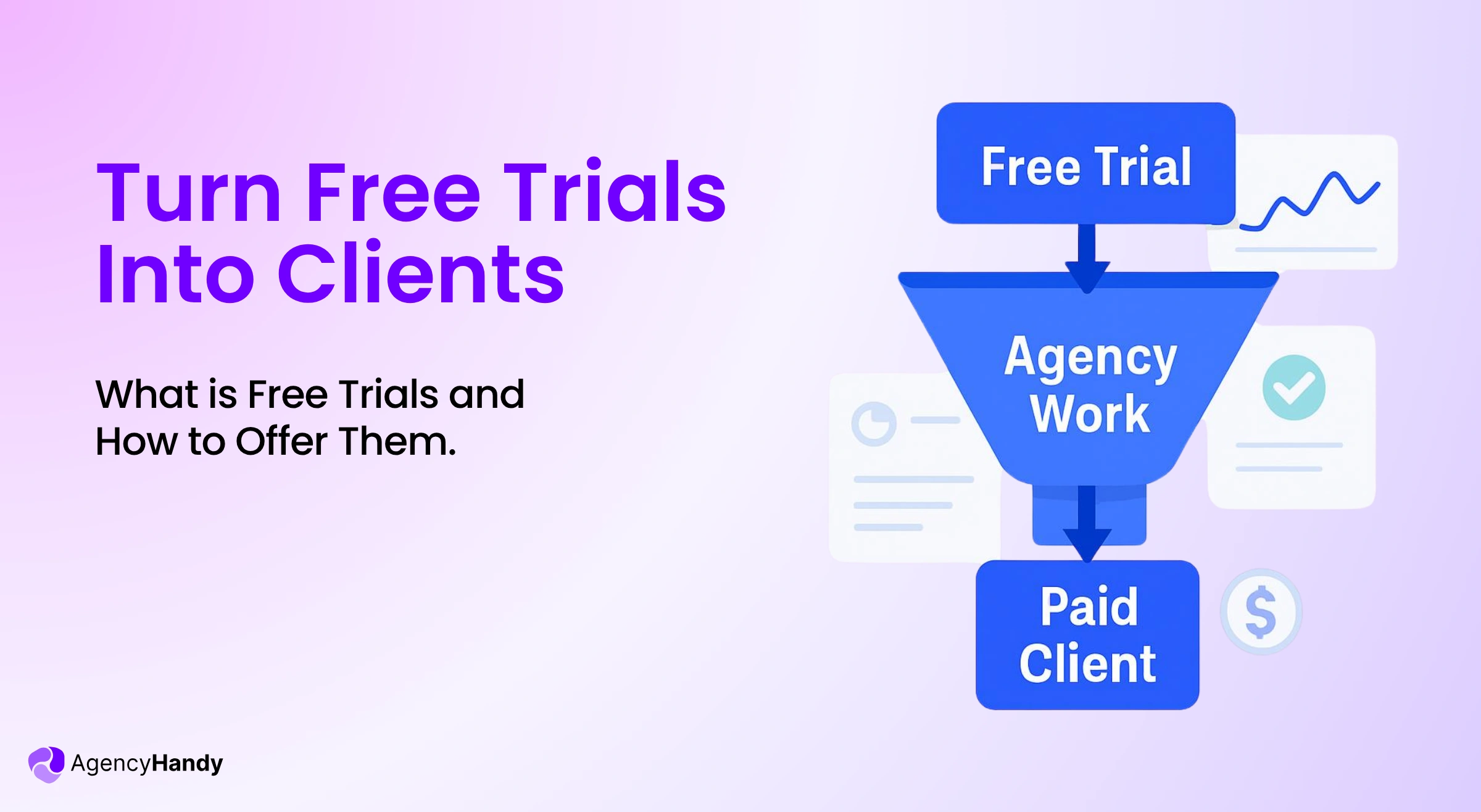



A potential client loves your pitch and appreciates your portfolio. But sometimes they won’t sign until they see the work firsthand.
Free trial services solve that problem. A productized service provider who offers a free trial quickly wins a client. But free service without a proper structure can cost more than what you’ll get in return.
Here, we’ll cover what free trial services are, when to offer them, and how to set them up the right way.
What Are Free Trial Services?
A free trial service is when you offer a limited scope of productized service to a potential client for free. It helps them understand your agency’s work before getting into a paid client relationship. At this stage, the potential client pays nothing. You just deliver a fraction of the full work.
But to run free trials without losing control of scope, time, and delivery, you need the right system behind it. That’s where productized service software comes in.
Why Should Agencies Offer Free Trial Services?
You might see a prospect asking questions about your service. But they never purchase. Why? It’s not the money. Rather, they’re still skeptical.
So, here are the key reasons for an agency to offer a free trial service.
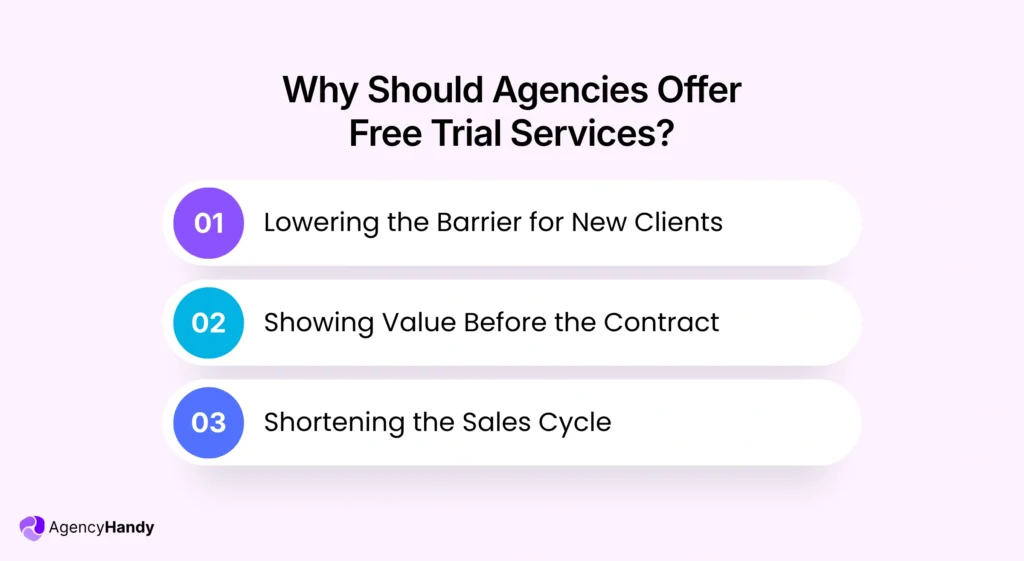
Lowering the Barrier for New Clients
Most clients hesitate to sign a contract. That’s because they’re not familiar with your agency’s —
- Work style
- Communication efficiency
- Quality of work
- Meeting deadline sense
That’s where your trial service for free comes into play. It gives prospects direct experience before any financial commitment. If you’re building your service setup, Productized Service Software: Definition, Benefits, Top Software & More covers the full system.
Showing Value Before the Contract
A proposal can’t show the clients what your agency can do. But with a free trial, you can show!
It helps a lot if you offer subjective productized services, like —
- Content writing
- Design
- SEO
- Social media
See, a potential client can read a case study or view a portfolio for productized services. Both build credibility. But when you provide a piece of well-executed work, it becomes the pitch.
Shortening the Sales Cycle
A free trial shortens the decision timeline of a potential client. And it makes total sense. When clients get direct experience of your piece of work, they don’t bother with proposals and follow-up calls.
It helps them to make purchase decisions faster. In fact, they decide with full acknowledgment after experiencing a structured productized trial service.
What are the Risks Agencies Need to Understand About Free Trial Services?
Free trials carry real risks. So, before you offer one, know exactly what can go wrong and what it costs you if it does.
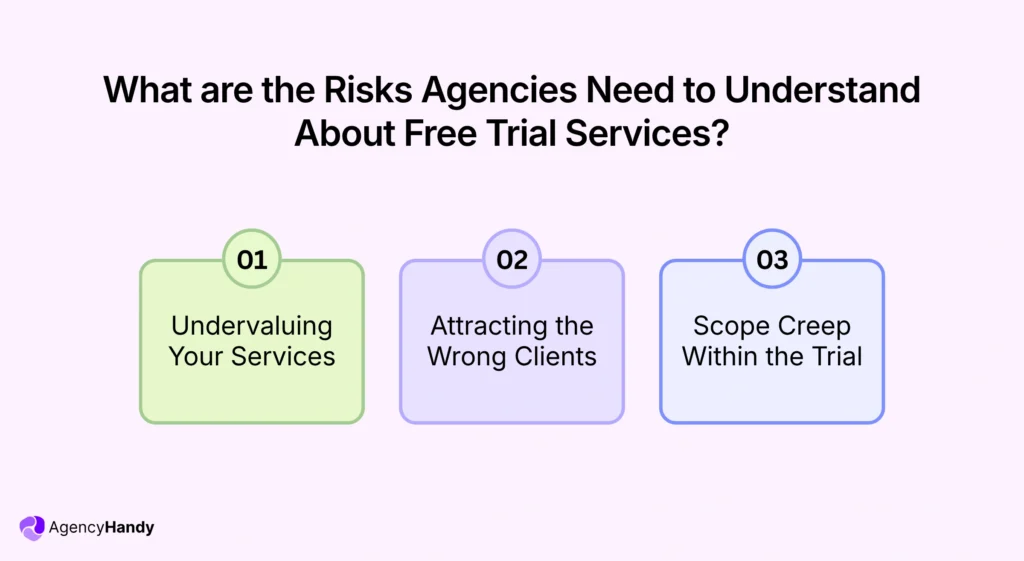
Undervaluing Your Services
When you offer free service, it sometimes sends signals to clients that you may not be confident in charging. Even if you offer quality work for free, clients rarely consider you as generous.
You see the reflection in how clients ultimately respond to your pricing and scope limits. Most importantly, a free offer hits your finances hard. Because every hour you spend and the resources you use, it costs you.
Thus, you need to have a proper structure in place. For a structured approach to pricing your services around trials, the service pricing guide is a useful reference.
Attracting the Wrong Clients
Some prospects sign up with no intention of paying. They just want the deliverables.
In fact, they shop across multiple productized service agencies, collect free work, and disappear when the trial ends. They’re easy to miss early and expensive to discover late.
Hence, you must filter them before you begin. Three quick checks work well —
- A short intake form
- A discovery call
- A simple budget confirmation
Scope Creep Within the Trial
Scope creep in a free productized service trial turns into a free project. It starts small with requests, such as —
- One extra revision
- One additional work
- One more round of feedback
Together, they consume your margin entirely.
Unspecific limits cause this every time. Write down the exact deliverables and timeframe before the trial begins. Then, send it to the client and get a signed acknowledgment before work starts. Mention upfront that everything beyond that scope is a paid request.
How to Structure a Free Trial Service That Actually Converts
Most agencies don’t fail at free trials because they offer too much. They fail because they never define the structure before the trial begins.
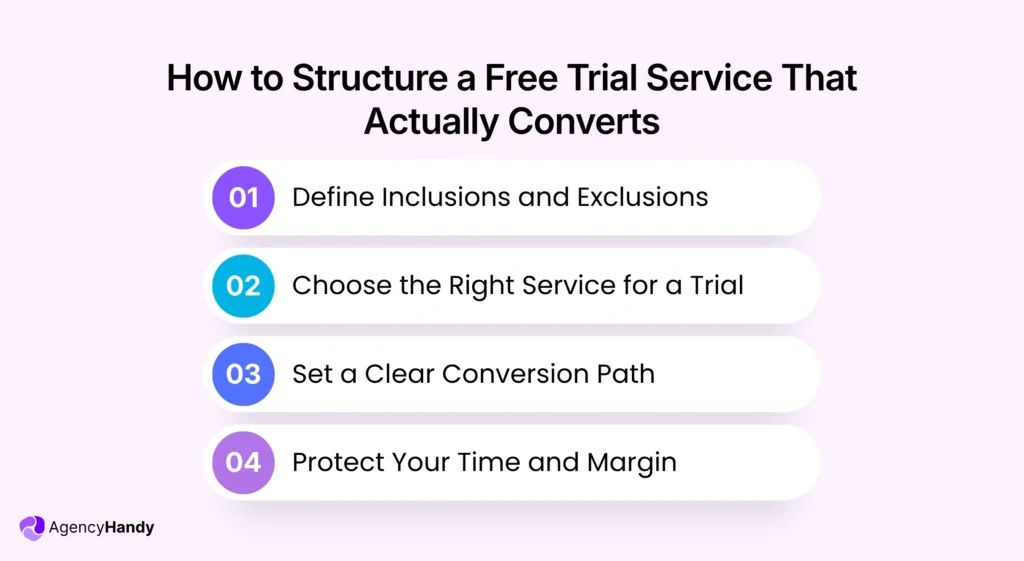
1. Define Inclusions and Exclusions
Write down exactly what your free trial service covers.
- One deliverable
- One deadline
- One revision
Then write down what it doesn’t cover.
- Extra deliverables
- Additional revisions
- Extended timeline
- Requests beyond trial scope
Now, send the writing document to the clients before you begin the work. If the client agrees with your terms, you start the work. If not, otherwise close the loop.
Agency Handy’s proposal builder makes this process simple. It lets you define the trial scope, set the terms, and send it for acceptance.
2. Choose the Right Service for a Trial
Pick a productized service with quick and visible results. The trial needs to deliver something that the client can review immediately.
Strong service options included —
- One week of social media content
- A single SEO audit
- One ad creative set
- A short blog post or content piece
- A landing page copy draft
- A paid ad campaign setup
- A competitor analysis report
- A one-time email sequence draft
3. Set a Clear Conversion Path
Explicitly mention the next step to the client before the trial starts. You must make the conversion process natural. At the end of the trial, you give the deliverables along with a clear proposal for paid commitment.
Also, verbally inform the client what happens after the trial ends. When you inform clients, it helps to convert them faster.
4. Protect Your Time and Margin
Set hard limits on everything —
- Scope
- Hours
- Revisions
- Deadline
Also, track every hour you spend on the trial work. It gives you a clear picture of the cost required for the work.
Most importantly, use an intake form to qualify the client before you begin the free service. If a prospect avoids filling out a short form, they won’t respect scope boundaries either.
Free Trial vs. Paid Discovery: Which One Should Agencies Offer?
Both models give prospects a direct experience of your work before they commit. The difference is who absorbs the cost and what that cost signals about the client relationship.
| Aspects | Free Trial | Paid Discovery |
| Client cost | Nothing upfront | Reduced flat fee |
| Agency cost | Full labor absorbed | Partially covered |
| Perceived value | Risk of undervaluing | Signals confidence in pricing |
| Scope | One defined deliverable | Defined phase |
| Client quality | Mixed (attracts trial-seekers) | Higher (client has financial skin in the game) |
| Conversion pressure | Higher | Lower |
| Pricing structure | Zero | Sets a pricing anchor for paid work |
Neither model fits every agency. Your service type, client quality, and pricing confidence determine the right call. In this case, One Time Pricing for Agencies: When It Works, and How to Set It Up can help you set the right fee for paid discovery.
How You Can Use Agency Handy to Offer Free Trial Services
Agency Handy gives productized service providers a single place to set up, scope, and convert free trial clients. Here’s how the flow works.
- Add a trial version of any service in the multi-service catalog
- Define the deliverables, set the scope, and make it available for clients to select.
- Use the proposal builder to document what your trial includes.
- Set the terms in the proposal and send it for the client to accept before you begin work.
- Configure what happens after the client accepts the proposal. It sets the conversion path.
As you can see, the entire flow lets you move from trial setup to paid commitment effortlessly.
Final Words
Free trial services for a productized service or agency work when the structure is right. So, define the scope clearly, qualify the client, and offer a service that delivers fast, visible results. Most importantly, build the conversion path before the trial begins.
Agency Handy lets you handle the entire process inside one platform. You can add a trial version of any service inside the service catalog. Use its proposal builder to define scope and configure post-acceptance rules, like auto invoice generation.
FAQs
1. Should agencies offer free trials?
Yes, agencies should offer free trials, but only when the scope is defined. Plus, the client is qualified, and there must exist a clear conversion path. It’s necessary since a structured trial builds credibility and shortens the sales cycle.
2. How long should an agency free trial last?
An agency free trial should last between 5 and 7 days. It should be long enough to deliver a noticeable output and short enough to maintain urgency. If you extend the trial beyond two weeks, it increases the risks of scope creep and cost.
3. What services work best as agency free trials?
Services that can offer quick and visible results work best as agency-free trials. Examples are a single SEO audit, a short content piece, one week of social media content, etc. Each delivers an observable output that the client can review immediately.